How do you find a business problem to launch a startup?
By Etienne DouillardUpdated 5 min read
Contents
⚠️ The business problem is the foundation of a company. The problem is what gives rise to the solution and the value proposition. If you work on a problem that doesn’t exist, is superficial, or isn’t important (blue in the diagram), it won’t let you build a profitable company, because your customers won’t buy your solution.
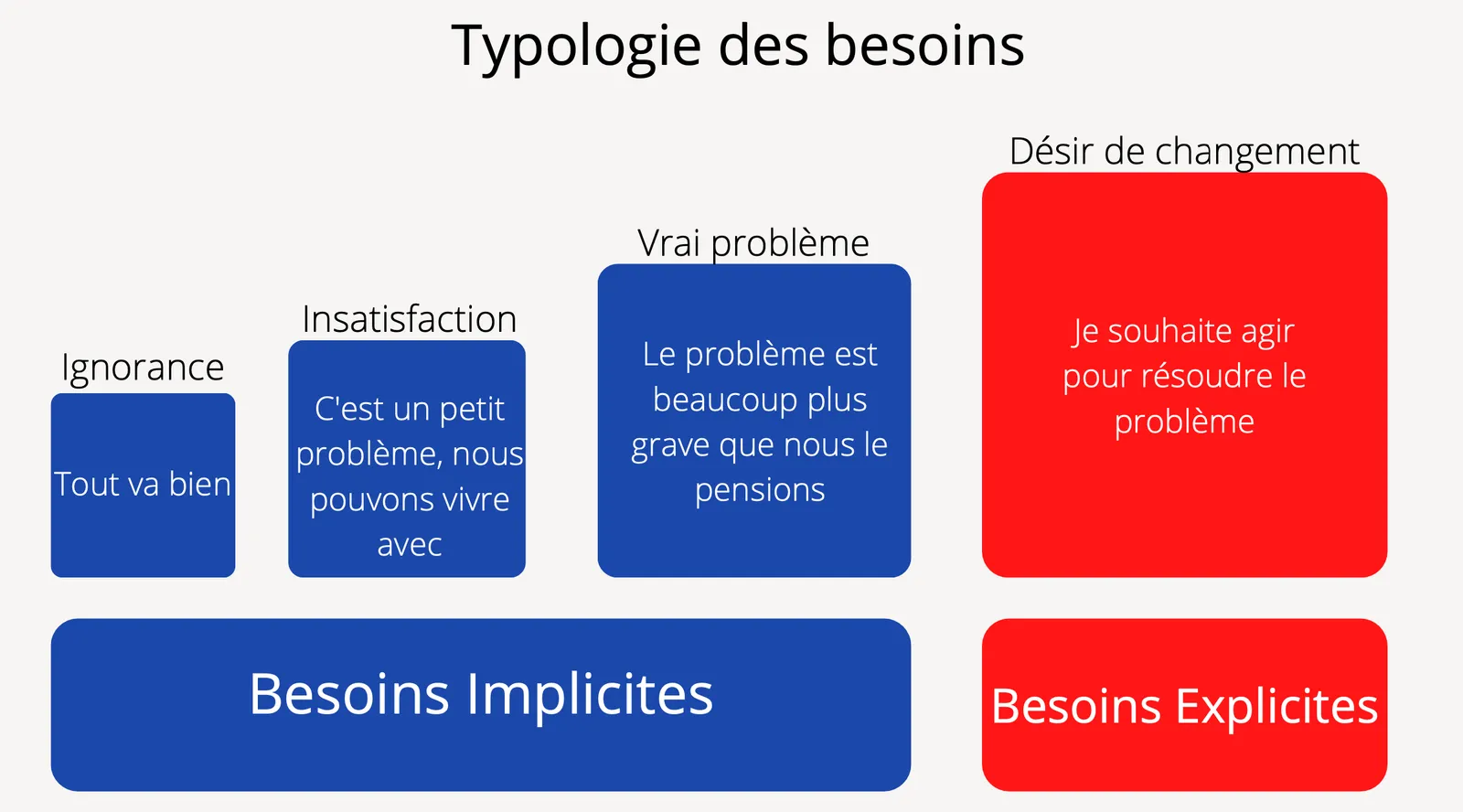
Step 1: Set hypotheses for a customer segment
💪 Attitude to adopt: Put yourself in your customer’s shoes.
1.1 Target your customer
Who are they? Where do they live? What do they do? What type of company? How old are they?
e.g.: An SME in the Nantes area, young French entrepreneurs, etc.
1.2 List your customer’s jobs, pains and gains
Using your experience, your knowledge or your intuition, list your hypotheses about your potential customer segment (also called prospects)
😌 JOBS: Identify your customer’s jobs (what they are trying to get done in a given situation).
😫 PAINS: Identify your customer’s problems (what annoys them or prevents them from getting their jobs done).
🤩 GAINS: Identify your customer’s gains (desired outcomes or benefits).
⚠️ The problem is the most important part
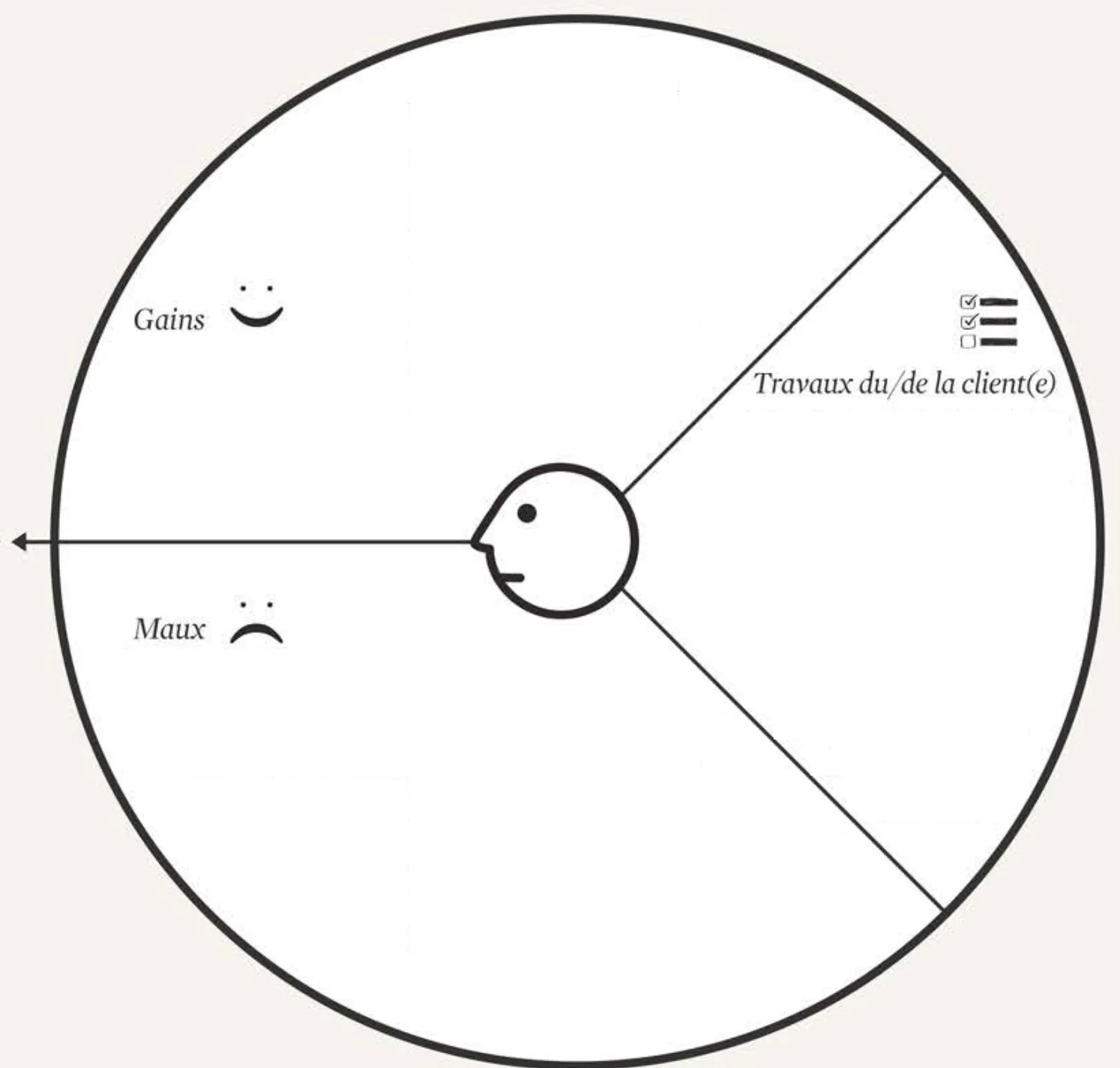
1.3 Rank your customer’s jobs, pains and gains
Using your experience, your knowledge or your intuition, prioritize your list of customer pains, gains and jobs.
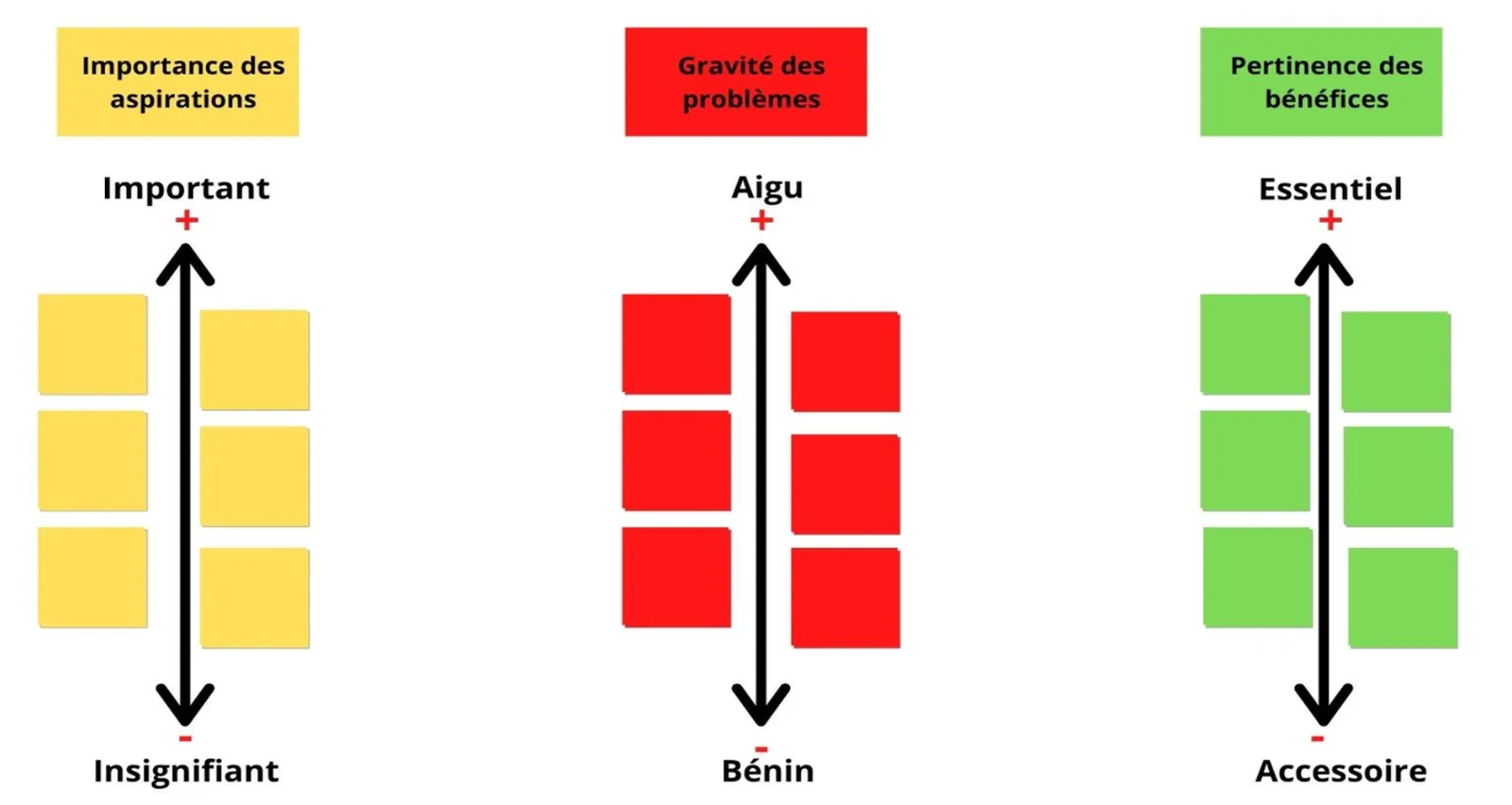
1.4 Example
Example for an electric bike aimed at a father:
- Top JOB: Get some exercise
- Top PAIN: Get around without polluting
- Top GAIN: Save on fuel, and therefore money, and reduce his carbon footprint
Step 2: Check your hypotheses
2.1 Desk and scientific research
Do some research online before starting field research. Scientific studies may already have proven your hypotheses.
If so, that’s a good thing: you can add new hypotheses that you’ll go and check in the field through interviews.
2.2 Go and meet your prospects
💪 Attitude to adopt: OBSERVE, and above all don’t SELL
🎯 The goal is for the person you’re talking to to state the problems themselves.
To do that, you need to prepare open, non-leading questions that don’t mention your solution. Ask about past facts and anecdotes and about the life of the person you’re talking to, not about projections, generalities or your solution.
👉 Rule of thumb: By default, customer conversations are bad. It’s your job to fix them.
To help, here is a list of good and bad interview questions.
Good question / bad question in an interview
Several techniques are available to get in touch with your targets:
- Emailing: get your prospects’ email addresses, then send them targeted messages.
- Social media: Post to ask for meetings, or contact your prospects through social networks.
- Phone: call your prospects directly to set up interviews
- Network: Reach out to people you know (friends, family, colleagues) to get to your customer segment.
👉 Do at least twenty or so interviews before moving on.
💡 Pro tip, contact your prospects at the right time to get more meetings.
Step 3: Analyze your conversations
Avoid bad data.
Bad data leads to false negatives (thinking the idea is dead when it isn’t) and, even more dangerously, false positives (convincing yourself you’re right when you’re not).
There are three types of bad data:
- 🥰 Compliments
- 🤥 Fluff
- 🤔 Ideas
🥰 Compliments
Most of your meetings will end with a compliment. It feels good. They said they liked it. Unfortunately, they are almost certainly lying. We are looking for validation of our idea, and because of that, we often make the mistake of taking compliments as reliable data when they are meaningless lies.
Why did the person say they liked it? How much money would it save them? How would it fit into their life? What else have they tried? If you don’t know, you’ve taken a compliment for real data.
👉 Rule of thumb: Compliments are the fool’s gold of customer conversations: shiny, distracting and worthless.
🤥 Fluff (generalities, hypotheticals, predictions)
Fluff comes in 3 forms:
- Generic claims (“I usually”, “I always”, “I never”)
- Future promises (“I would”, “I will”)
- Hypothetical possibilities (“I might”, “I could”)
The most dangerous fluff in the world is: “I’d definitely buy that.”
If the person you’re talking to is talking in generalities or promises, bring them back to real facts. If they tell you they’ll buy it, ask them to pay now. If they refuse, it was fluff.
👉 Rule of thumb: When they speak in generalities, people describe themselves as the person they’d like to be, not as who they really are.
🤔 Ideas
People love to give us more. During a good conversation, the people you talk to can come over to your side. That’s a good sign. They’re excited and see the potential, and they start listing tons of ideas, possibilities and feature requests.
Write them down, but don’t rush to add them to your to-do list. What matters for a startup is to focus on one scalable idea and execute it, rather than jumping on every idea and spreading yourself thin.
To do this, you can dig into the ideas to find the underlying problem:
- “Why would you want that?”
- “What would that let you do?”
- “How are you coping without it?”
- “How would that fit into your day-to-day?”
👉 Rule of thumb: People’s approval doesn’t make your business any better. Keep your idea and your ego out of the conversation until you’re ready to ask for commitments.
Step 4: Decide & execute
Have you noticed a recurring and important business problem?
- Keep validating it with quantitative research.
- Ask for commitments ($$)
- Prototype your idea as soon as possible and run user tests
No recurring and important business problem?
- Start this work again until you find a recurring and important problem.
Once the problem is validated, you still need your first customers: that is what outbound for B2B start-ups is about.
Frequently asked questions
Why is the business problem the foundation of a company?
The problem is what gives rise to the solution and the value proposition. If you work on a problem that doesn't exist, is superficial or isn't important, you won't build a profitable company, because your customers won't buy your solution.
How many interviews do you need to check your hypotheses?
Do at least twenty or so interviews before moving on. The attitude to adopt is to observe, and above all not to sell: prepare open questions about past facts and anecdotes, so that the person you're talking to states their problems themselves.
What bad data should you throw out after an interview?
There are three kinds: compliments, which are almost always polite lies; fluff, made of generalities, future promises and hypotheticals; and feature ideas, which you note down without getting sidetracked. This data creates false negatives and, more dangerously, false positives.
Etienne Douillard
Co-founder and CEO, MeetMagnet
An engineer and entrepreneur for over five years, Etienne works every week with B2B SMEs on signal-based prospecting.
From intent to booking
MeetMagnet spots who has a reason to talk to you right now, writes the opener that stands out, and a real person keeps it on track.